
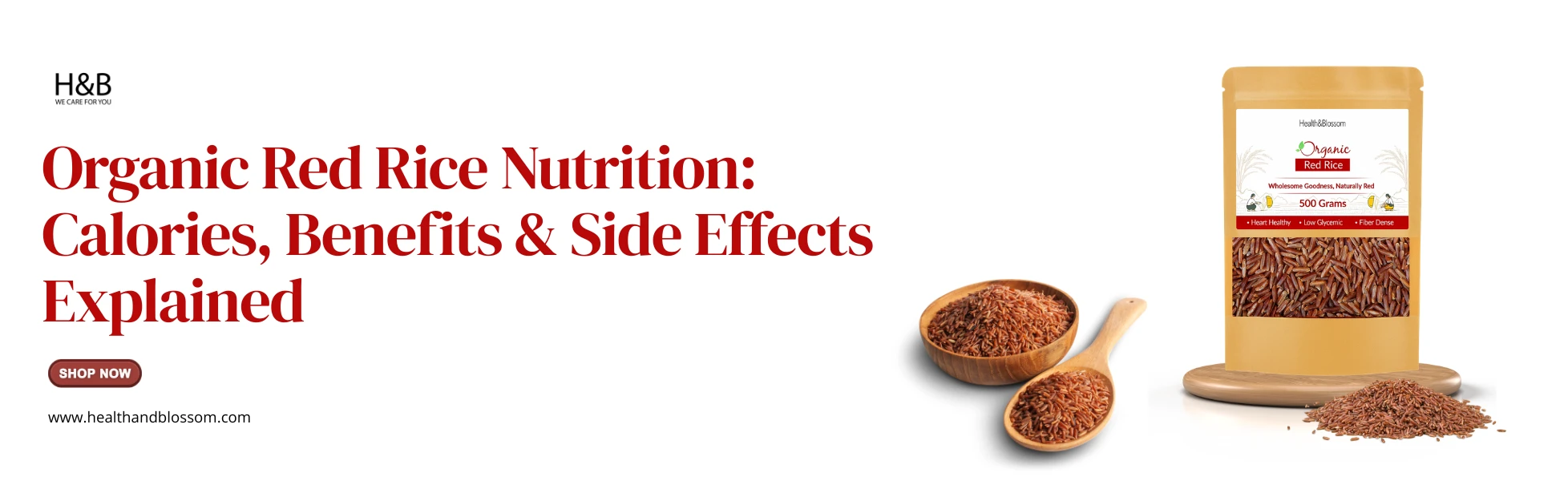
There’s something quietly powerful about foods that haven’t been overly processed, polished, or stripped of their natural identity. Organic red rice is one such grain—deeply rooted in traditional diets, yet only recently rediscovered by modern consumers looking for cleaner, more nourishing alternatives.
Unlike the usual white rice that fills most plates, this vibrant, earthy grain carries more than just color. It tells a story of soil health, minimal processing, and nutrient retention. But beyond the buzz, what does organic red rice nutrition offer? And is it worth making the switch?
Let’s explore it in a way that goes beyond the basics.
To truly understand organic red rice nutrition, it helps to look at what hasn’t been removed from it.
Most commercial rice undergoes milling and polishing, which strips away the bran and germ—the very layers where nutrients are concentrated. Organic red rice, however, is typically semi-polished or unpolished. That outer red bran layer is intact, and that’s where the real value lies.
This bran layer contains:
Natural plant pigments (anthocyanins)
Trace minerals from soil absorption
Dietary fiber that supports digestion
Small amounts of essential fatty acids
So instead of being just a source of carbohydrates, it becomes a more complete, slow-releasing energy grain.
At first glance, the calorie count in organic red rice nutrition may not look drastically different from white rice. But calories alone don’t tell the full story.
What matters more is how your body processes those calories.
Because of its intact structure:
Energy is released gradually, not in spikes
You stay fuller for longer periods
There’s less likelihood of sudden hunger crashes
This makes it particularly useful for people trying to maintain steady energy levels throughout the day—whether you’re working long hours, managing household tasks, or balancing both.
One of the less-discussed yet important benefits of organic red rice is its effect on metabolism. Instead of overwhelming the body with quick-digesting starch, it provides a steady stream of fuel. This helps the body regulate insulin response more efficiently over time.
For individuals dealing with lifestyle-related imbalances, this subtle shift can be meaningful when combined with an overall balanced diet.
Unlike refined grains that leave you hungry soon after eating, organic red rice creates a sense of sustained fullness. This isn’t just because of fiber, but also due to its dense structure, which requires more chewing and slower digestion.
Over time, this can naturally reduce portion sizes without conscious restriction—something many diets fail to achieve.
The term “detox” is often overused, but your body already has built-in detox systems—primarily the liver and digestive tract.
Here’s where organic red rice nutrition quietly contributes:
Fiber helps move waste efficiently through the gut
Antioxidants reduce oxidative stress on cells
Minimal chemical exposure (due to organic farming) reduces toxic load
It’s not a miracle cleanser, but it supports the body’s natural rhythm instead of disrupting it.
Iron in plant-based foods is often overlooked because it’s not as easily absorbed as animal-based sources. However, organic red rice offers iron in a form that, when paired with vitamin C-rich foods (like lemon or vegetables), can still contribute meaningfully.
This is especially relevant in regions where iron deficiency is common due to dietary patterns.
One of the underrated benefits of organic red rice is cultural and historical. It has been consumed for generations in parts of India, especially in coastal and southern regions.
Returning to such grains often means:
Eating foods aligned with local climates
Supporting traditional farming practices
Reducing dependency on overly refined staples
Sometimes, better nutrition isn’t about adding new foods—it’s about going back to older ones.
Let’s be honest—health alone doesn’t keep food on your plate. Taste matters.
Organic red rice has:
A slightly nutty, earthy flavor
A firmer, chewier texture
A satisfying bite that pairs well with rich curries
It absorbs flavors differently than white rice, often enhancing the overall dish rather than just acting as a filler.
Cooking tip: Soaking it for 30–45 minutes before cooking can improve texture and reduce cooking time.
Even the healthiest foods have nuances, and organic red rice nutrition is no exception.
If your diet has mostly consisted of refined grains, switching suddenly to organic red rice might feel heavy initially. This isn’t a flaw—it’s your digestive system adapting to higher fiber and density.
A gradual transition works best.
While healthier than white rice, it’s still a carbohydrate source. Those following strict low-carb or ketogenic diets may need to limit portions.
Not all red rice available in the market is truly organic or minimally processed. Poor-quality grains may lose many of the advantages discussed.
This is why sourcing becomes just as important as choosing the grain itself.
The difference between the two goes beyond color. White rice is stripped of its bran and nutrients during processing, while organic red rice retains most of its natural goodness.
This means:
More fiber
Better nutrient retention
Slower digestion
If you’re aiming for a more balanced diet, the switch is worth considering.
There’s a growing shift toward clean eating and traditional foods. People are becoming more aware of what goes into their meals, and organic red rice fits perfectly into that mindset.
It’s not just about nutrition—it’s also about sustainability, taste, and reconnecting with wholesome ingredients that have been around for generations.
In a world full of processed options, going back to basics can be surprisingly powerful. Organic red rice nutrition offers a balance of taste and health that’s hard to ignore. From supporting heart health to aiding digestion, its benefits make it more than just a trendy grain.
That said, no single food is a magic solution. The real impact comes from consistency and balance. Including organic red rice as part of a varied diet can be a simple yet meaningful step toward better health.
If you’re ready to make a healthier switch and experience the benefits yourself, don’t wait.
👉 Shop now at healthandblossom.com and bring home the goodness of authentic organic red rice today.



You need to Sign in to view this feature

This address will be removed from this list